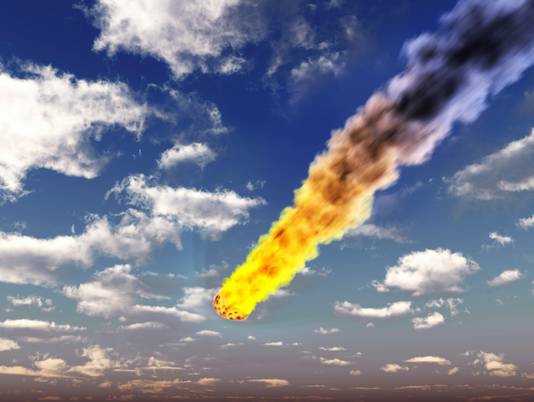
This is not Asteroid 2012 DA14 that caused this damage, that celestial body will still makes its appearance later this afternoon! The 10 ton space rock that exploded over Russia is completely different from the asteroid passing earth later today, they are coming from different locations in space and in different directions. This exploding meteor caught the Russian scientist and NASA completely by surprise.
 |  |
MOSCOW — A meteor shower sparked an explosion that left more than 500 people injured Friday in southern Russia, the local Emergency Ministry said.
Nine people have been hospitalized, a spokesman for the Emergency Ministry of Chelyabinsk told CNN. Most of the injuries were caused by broken glass.
State-run RIA Novosti news agency said at least three people were critically injured by broken glass.
A bright white flash appeared in the sky for a few seconds, followed by a heavy “bang” that sounded like a blast, according to official news agency Itar-Tass.
The explosion was centered 50 miles (80 km) from Satka city, in the Chelyabinsk region, Itar-Tass reported.
Russian emergency officials said the meteor was destroyed after it partially burned in the lower atmosphere over the Ural district.
Glass broke in high-rise buildings, causing the injuries, the federal Emergency Ministry said in a statement.
For sky-watchers, the reports bring to mind the famous Tunguska event of 1908 in remote Siberia.
That asteroid entered the atmosphere and exploded, leveling trees over an area of 820 square miles — about two-thirds the size of Rhode Island.
In total, some 80 million trees were felled, radiating out from the center of the blast, but no crater was left.
Friday’s Chelyabinsk meteor shower comes on the same day that a hefty asteroid is due to charge past the Earth at a pretty close range, in space terms.
Known as 2012 DA14, the asteroid is thought to be 45 meters — about half a football field — long.
But scientists say it will come no closer than 17,100 miles from our planet’s surface.
Those located in Eastern Europe, Asia or Australia will get the best telescope-aided view, scientists said. It won’t be visible to the naked eye.
But scientists say it will come no closer than 17,100 miles from our planet’s surface.
 |  |
“No Earth impact is possible,” according to Don Yeomans, manager of the Near-Earth Object Program Office at NASA’s Jet Propulsion Laboratory.
Those located in Eastern Europe, Asia or Australia will get the best telescope-aided view, scientists said. It won’t be visible to the naked eye.