What is a Supermoon?
The supermoon occurs when a full moon lines up with the Earth and the sun at a specific point in its orbit, called the lunar perigee. That's the point at which the moon is nearest to Earth as it traces its elliptical path around our planet.

When will Supermoons occur during 2014?
Lunar enthusiasts will be able to ring in the new year with a January 1 supermoon – one of two that will occur during January of 2014, and the first of five that will take place before the end of the calendar year, mark your calendars.
- January 1, 2014, will be the second and third closest for the year
- January 30, 2014
- July 12, 2014
- August 10, 2014, will be the closest supermoon of the year
- September 9, 2014
What does the Supermoon mean to you?

Despite the claims of some people around the world, the supermoon will not destroy the Earth.
Will the supermoon change my behavior?
Have no fear: The supermoon will not turn you into a lunatic.
Are all supermoons the same?Not All Supermoons Are The Same.
The sun's gravity is actually responsible for pulling the Earth and moon into a closer alignment, causing the orbital variation.
Do winter supermoons look supersized?
They should. The Earth is closest to the sun in December each year, meaning that the star's gravity pulls the moon closer toward the planet. Because of this effect the largest supermoons happen in the winter.
Are Supermoons Will Get Smaller?
Get your supermoon fix while you can; the moon is moving on to greener pastures. Supermoons will get smaller in the distant future because the moon is slowly propelling itself out of Earth's orbit, moving 3.8 centimeters farther from Earth each year.
Scientists suspect that at formation, the moon started out about 14,000 miles (22,530 kilometers) from the planet, but now, it's about about 238,900 miles (384,402 kilometers) away.
Do Supermoons Occur Every Year
A supermoon happens about once a year and are viewable from both the Northern and Southern hemispheres. Keep an eye to the sky and lookout for the next one heading toward Earth in Aug. 2014.
Will the supermoon change my behavior?
Have no fear: The supermoon will not turn you into a lunatic.
Are all supermoons the same?Not All Supermoons Are The Same.
The sun's gravity is actually responsible for pulling the Earth and moon into a closer alignment, causing the orbital variation.
Do winter supermoons look supersized?
They should. The Earth is closest to the sun in December each year, meaning that the star's gravity pulls the moon closer toward the planet. Because of this effect the largest supermoons happen in the winter.
Are Supermoons Will Get Smaller?
Get your supermoon fix while you can; the moon is moving on to greener pastures. Supermoons will get smaller in the distant future because the moon is slowly propelling itself out of Earth's orbit, moving 3.8 centimeters farther from Earth each year.
Scientists suspect that at formation, the moon started out about 14,000 miles (22,530 kilometers) from the planet, but now, it's about about 238,900 miles (384,402 kilometers) away.
Do Supermoons Occur Every Year
A supermoon happens about once a year and are viewable from both the Northern and Southern hemispheres. Keep an eye to the sky and lookout for the next one heading toward Earth in Aug. 2014.
Will the supermoon bring higher tides?
 Yes, all new moons (and full moons) bring higher-than-usual tides, but perigee new moons (or perigee full moons) elevate the tides even more.
Each month, on the day of the new moon, the Earth, moon and sun are aligned, with the moon in between. This line-up creates wide-ranging tides, known as spring tides. High spring tides climb up especially high, and on the same day low tides plunge especially low.
The January 1 and 30 extra-close new moons will accentuate the spring tide, giving rise to what’s called a perigean spring tide. If you live along an ocean coastline, watch for high tides caused by the two January 2014 new moons – or supermoons.
Will these high tides cause flooding? Probably not, unless a strong weather system accompanies the perigean spring tide. Still, keep an eye on the weather, because storms do have a large potential to accentuate perigean spring tides.
The second supermoon will occur on January 30, according to Bruce McClure of Earthsky. However, the moon will be at the new phase on both days, meaning that very few people will actually be able to see the phenomena.
Can I see the January 1 or January 30 supermoon?

Possible exception to what I just said: People in far-western North America or islands in the Pacific might be able to spot an extremely-thin young moon with binoculars after sunset on January 1, 2014. Why western North America? That’s the last largely populated time zone before January 2 dawns at the International Date Line. By the time the sun sets there, the moon will have had time to pull some distance away from the sun on the sky’s dome … so careful observers might spot it! Use binoculars, and scan above the place the sun set.
 Yes, all new moons (and full moons) bring higher-than-usual tides, but perigee new moons (or perigee full moons) elevate the tides even more.
Each month, on the day of the new moon, the Earth, moon and sun are aligned, with the moon in between. This line-up creates wide-ranging tides, known as spring tides. High spring tides climb up especially high, and on the same day low tides plunge especially low.
The January 1 and 30 extra-close new moons will accentuate the spring tide, giving rise to what’s called a perigean spring tide. If you live along an ocean coastline, watch for high tides caused by the two January 2014 new moons – or supermoons.
Will these high tides cause flooding? Probably not, unless a strong weather system accompanies the perigean spring tide. Still, keep an eye on the weather, because storms do have a large potential to accentuate perigean spring tides.
The second supermoon will occur on January 30, according to Bruce McClure of Earthsky. However, the moon will be at the new phase on both days, meaning that very few people will actually be able to see the phenomena.
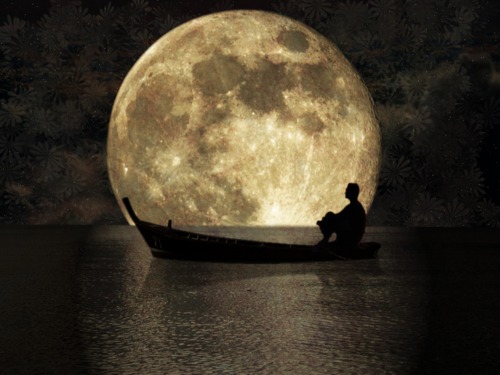
Generally supermoons photos are amazing but don’t expect to see the new moon on January 1 or January 30. At the vicinity of new moon, the moon hides in the glare of the sun all day long, rising with the sun at sunrise and setting with the sun at sunset. On the other hand, if you were on the moon looking at Earth, you’d see a full Earth.
Possible exception to what I just said: People in far-western North America or islands in the Pacific might be able to spot an extremely-thin young moon with binoculars after sunset on January 1, 2014. Why western North America? That’s the last largely populated time zone before January 2 dawns at the International Date Line. By the time the sun sets there, the moon will have had time to pull some distance away from the sun on the sky’s dome … so careful observers might spot it! Use binoculars, and scan above the place the sun set.


